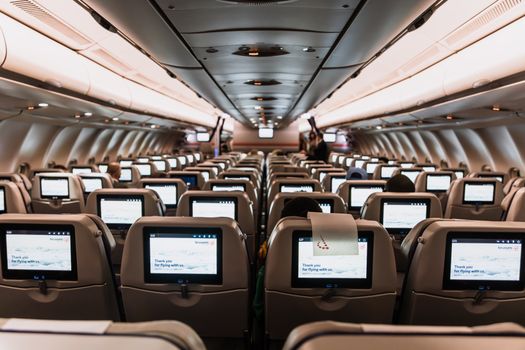
If you’ve flown long-haul economy in the last decade, you know the pain: cramped seats, dry air, and a vague sense that your soul is being slowly compressed. Airlines have spent years squeezing more seats into wide-body planes, but the real revolution is happening in a smaller, nimbler aircraft: the Airbus A321XLR. This single-aisle jet can fly up to 11 hours non-stop, and airlines like JetBlue, Wizz Air, and Aer Lingus are betting it will change how we think about long-haul flights. Last week, I flew from London Gatwick to Dubai on Wizz Air’s new A321XLR—a route that used to require a wide-body plane—and I came away with mixed but optimistic feelings.
The Plane Itself: Smaller, but Smarter
The A321XLR is a stretched version of the A321neo, with an extra fuel tank in the belly (and one in the cargo hold that takes up about three rows of luggage space). It seats 220 passengers in a single-class configuration, which is about the same as a Boeing 757 but with better fuel efficiency. The cabin is quiet—noticeably quieter than the A320 I flew on to Paris last month—and the windows are bigger, which helps with claustrophobia. But here’s the catch: it’s still a narrow-body plane. The seats are 17.5 inches wide, same as any other single-aisle. If you’re a larger person or just someone who hates contact with strangers, those 11 hours will feel long.
Wizz Air has configured their XLRs with 239 seats in a high-density layout, which is aggressive. I’m 5’10” and my knees touched the seatback in front of me. For taller folks, this is going to be brutal. But the plane’s secret weapon is its cabin pressure. The XLR uses a new system that keeps the cabin at 6,500 feet equivalent altitude instead of the usual 8,000 feet. That means less fatigue, fewer headaches, and better sleep. I noticed it about four hours in—I usually feel groggy and dehydrated, but I was actually able to watch two movies without dozing off. It’s a small change that makes a big difference.
The Route Revolution: Where You Can Now Fly Cheap
The A321XLR’s range means airlines can open routes that were previously uneconomical with wide-bodies. Wizz Air has already announced flights from London to Delhi, Milan to Dubai, and Berlin to New York (via a refueling stop in Iceland). Ryanair is rumored to be looking at transatlantic routes. This is huge for budget travelers. Instead of paying $800 for a flight on British Airways, you might pay $250 on Wizz Air. The trade-off is comfort, but for many of us, that’s a deal worth taking.
I paid £149 for my one-way ticket from London to Dubai. That’s insane. Even with baggage fees (£45 for a carry-on) and a seat selection fee (£12 for an aisle), I was still under $250. The flight itself was 6 hours and 40 minutes—shorter than I expected because of a tailwind. The plane arrived on time, which is rare for any budget airline. The service was minimal: no in-flight entertainment (bring your own tablet), and food is pay-per-item. I bought a cheese sandwich for £8, which was mediocre but edible. The flight attendants were efficient but not warm. That’s the Wizz Air way.