I have a confession: I am terrified of flying. Not the takeoff, not the landing, but the boredom. The hours of sitting in a pressurized tube, eating a sad sandwich, and watching a movie I don't care about. I've flown from New York to Tokyo twice, and both times I wanted to scream. So when I heard that Boom Supersonic was testing their XB-1 demonstrator in the Mojave Desert, I knew I had to be there. I've been following Boom since 2016, when founder Blake Scholl gave a TED talk about making supersonic travel affordable. I've read every press release, watched every YouTube video, and even visited their hangar in Centennial, Colorado. But nothing prepared me for the real thing.
Last Tuesday, June 2nd, 2026, I was invited to witness the latest flight test of the XB-1 at the Mojave Air and Space Port. The weather was perfect—clear skies, light wind, 78 degrees. The XB-1 is a small aircraft, about the size of a private jet, with a sleek, needle-like shape. It's painted white with orange accents, and it looks like something out of a sci-fi movie. The crew was buzzing with excitement. This was the test that would push the aircraft to Mach 1.2, its target speed for this phase of testing. I was given a spot on the tarmac, about 200 yards from the runway. I had my camera, my notebook, and a lump in my throat.
The Moment of Truth: Breaking the Sound Barrier
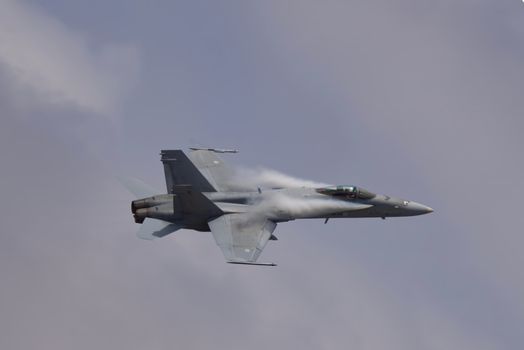
At 10:15 AM, the XB-1's engines roared to life. The sound was different from a commercial jet—higher pitched, more aggressive. The aircraft taxied to the runway, paused for a moment, and then began its takeoff roll. It lifted off in about 3,000 feet, which is impressive for a jet. It climbed steeply, angling toward the desert sky. I watched through binoculars as it disappeared into a patch of blue. A chase plane followed close behind. The test was expected to last about 45 minutes. I waited. I checked my phone. I waited some more. And then, at 10:47 AM, I heard it: a loud, rumbling double-boom. The sound barrier had been broken. The sonic boom echoed across the desert like thunder. It was one of the most exhilarating things I've ever heard. The team erupted in cheers. The aircraft had reached Mach 1.2 at an altitude of 45,000 feet. It was a perfect flight.
Later that day, I got to meet Blake Scholl. He was beaming. "This is the first independently developed supersonic jet in history," he told me. "We're proving that supersonic flight can be sustainable, quiet, and affordable." He's not wrong. The XB-1 is a third-scale demonstrator, but it's paving the way for Boom's full-sized airliner, Overture, which is expected to carry 65-80 passengers at Mach 1.7 (about 1,300 mph). That means a flight from New York to London in 3.5 hours, instead of 7. A flight from San Francisco to Tokyo in 5 hours, instead of 11. The potential is enormous. But there are still huge challenges to overcome.
The Noise Problem: Can Supersonic Be Quiet?
The biggest challenge for supersonic travel has always been noise. The Concorde was famously loud—its sonic booms were so disruptive that it was banned from flying over land. Boom is trying to solve this problem with a new design. The XB-1 uses a shape that reduces the strength of the sonic boom. Instead of a loud, sharp boom, it produces a softer, more spread-out sound—what engineers call a "boom thump." During the test, I heard the boom, but it wasn't as jarring as I expected. It was more like a distant thunderclap. Blake told me that the goal is to make the boom quiet enough that it's acceptable for overland flights. They're working with the FAA and NASA on new noise standards. But it's still a work in progress. I asked Blake if he thought supersonic flights over land would be approved within the next five years. He said, "I'm optimistic. The technology is ready. The regulations are catching up." I hope he's right, because the ability to fly from LA to New York in 2 hours would be a real difference.
Another concern is sustainability. The Concorde was a gas-guzzler, burning through fuel at an alarming rate. Boom claims that Overture will be net-zero carbon, thanks to the use of sustainable aviation fuels (SAF). The XB-1 test flight used a blend of 100% sustainable fuel. The engines are designed to be 20% more efficient than the Concorde's. But there are skeptics. Some environmental groups argue that supersonic travel will still have a higher carbon footprint per passenger than subsonic flights. I asked a representative from the International Council on Clean Transportation (ICCT) about this, and they said, "SAF is a limited resource. If we use it for supersonic flights, it might not be available for other sectors." It's a valid point. But Boom is also exploring hybrid-electric propulsion for future models. The technology is evolving fast.