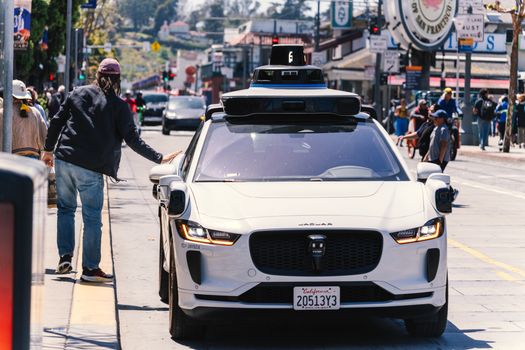
I’ll be honest with you — when I first heard about Waymo’s self-driving taxis expanding to downtown Phoenix back in March, I was skeptical. Not because I don’t believe in the technology. I do. But because I’ve seen enough YouTube compilations of autonomous vehicles getting confused by construction zones and confused pedestrians to know that “self-driving” doesn’t always mean “ready for the real world.” Still, when I found myself in Phoenix last Tuesday with a free afternoon, I figured why not. Let me tell you what actually happened.
Getting Into the Car Feels Weirdly Normal
The Waymo app is almost identical to Uber or Lyft. You punch in your destination, you see the price (about $15 for a 4-mile trip in downtown Phoenix), and you wait. A white Jaguar I-Pace pulled up — no driver, just a lidar sensor spinning on the roof like some kind of alien periscope. The doors unlocked automatically when I approached. I got in, buckled up, and the screen in the dashboard said “Ready to go.”
I pressed the green button and the car pulled out. No fanfare. No robotic voice telling me to enjoy the ride. Just a smooth acceleration into traffic.
Here’s what surprised me: I didn’t feel nervous. I mean, I expected to feel nervous. I’d hyped myself up for a white-knuckle experience. But the car behaved like a cautious new driver — maybe even too cautious. It stopped at yellow lights that I would’ve gunned through. It gave pedestrians an absurd amount of space. At one point, it waited 15 seconds for a jaywalker to slowly cross the street while the car behind us honked. I actually laughed out loud.
The Scary Moment That Made Me Believe
About halfway through the ride, we approached a four-way stop. A human driver in a pickup truck rolled through without stopping. My Waymo saw him coming and slammed on the brakes. Not gently — full stop, the kind that throws you forward against the seatbelt. For a split second, I thought we’d been hit. But the truck sailed past, and the Waymo proceeded normally.
That moment convinced me. A human driver — distracted, annoyed, maybe on their phone — would have caused an accident. The Waymo’s reaction time was instant, because it’s watching 360 degrees at all times. It doesn’t blink. It doesn’t get road rage. It just computes and reacts.
According to Waymo’s latest safety report (released early this month), their vehicles have driven over 10 million miles in fully autonomous mode across Phoenix, San Francisco, and Los Angeles. The data shows they’re involved in 85% fewer crashes that result in injury compared to human drivers. Is that perfect? No. But it’s a hell of a lot better than humans.