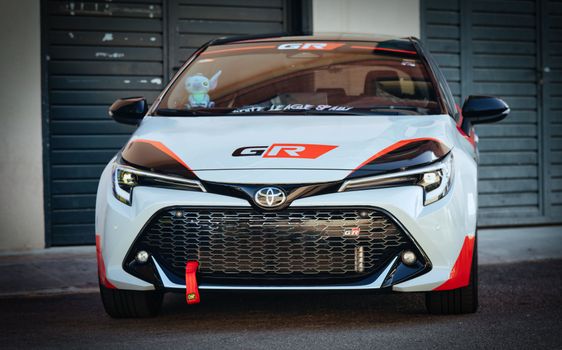
If you're in the market for a compact car in 2026, you're probably looking at two names: Toyota Corolla and Honda Civic. These two have been duking it out for decades, and both just received significant updates for the 2026 model year. I spent a week with each — a Corolla SE Hybrid and a Civic Sport Touring Hybrid — driving them on highways, backroads, and around the city. The verdict? One of them is clearly the better car, and it's not the one I expected.
First, a confession: I've always been a Civic guy. I owned a 2012 Civic Si in high school and loved it. The Corolla always felt like the sensible choice — reliable, sure, but boring. The 2026 models, however, have both evolved in very different directions. Let's break it down.
Performance: The Hybrid Wars Heat Up
Both the Corolla and Civic now come standard as hybrids. No more base four-cylinder engines. Toyota has been doing hybrids forever, so you'd expect them to have an edge, but Honda caught up fast. The 2026 Corolla Hybrid produces 138 horsepower from its 1.8-liter four-cylinder and two electric motors. The Civic Hybrid uses a 2.0-liter four-cylinder with two motors, good for 200 horsepower. On paper, the Civic is significantly quicker, and it feels it. The Corolla gets to 60 mph in about 8.5 seconds — fine for commuting, but merging onto a highway requires some planning. The Civic does it in 6.8 seconds. That's a real difference.
But here's the twist: the Corolla Hybrid gets an estimated 52 mpg combined, while the Civic manages 47. That's a 5 mpg gap, which over a year of driving means about $200 in fuel savings (at current US gas prices of around $3.40 per gallon). Is the extra performance worth the fuel economy hit? For most people, probably yes. But if you're hyper-miling or have a long commute, the Corolla makes a strong case.
Interior and Comfort: A Tale of Two Philosophies
Slide inside the Corolla, and you're greeted by a cabin that's… fine. The materials are decent, the seats are comfortable for short trips, and the 8-inch touchscreen runs Toyota's latest infotainment system. But it feels like Toyota designed this car to be an appliance. Everything is functional, nothing is exciting. The digital gauge cluster is small and hard to read in direct sunlight. The base audio system sounds thin.
The Civic, on the other hand, feels like a car from a class above. The interior is spacious — rear legroom is actually competitive with some midsize sedans. The seats are supportive and offer more adjustability. The 9-inch touchscreen runs Honda's new system, which finally supports wireless Apple CarPlay and Android Auto without glitches. And the Bose premium audio system is genuinely good. The Civic's cabin is quieter at highway speeds, too. Honda clearly invested in NVH (noise, vibration, harshness) reduction, and it shows.