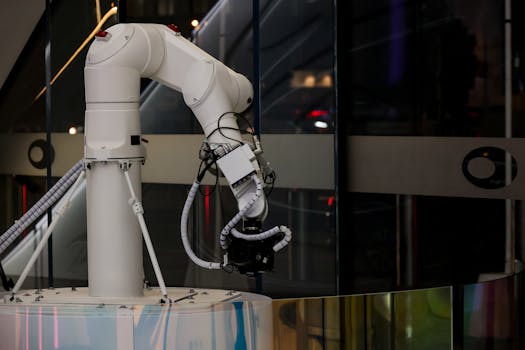
I've eaten at some strange places. A restaurant in Tokyo where the chefs are monkeys. A pop-up in a Berlin basement. But nothing prepared me for what I experienced last Thursday at Algorithme, the world's first fully AI-run restaurant in Copenhagen.
The concept is simple: a Michelin-starred chef (René Redzepi of Noma fame) designed the menu, but the cooking is done entirely by robots. No human hands touch the food. No servers take your order. Everything is automated. I booked a table three months in advance and flew to Denmark just to try it. Was it worth the hype? Let me tell you everything.
First Impressions: The Robot Greeter
The restaurant is located in a refurbished warehouse in the meatpacking district, a gritty area that's become Copenhagen's culinary hotspot. The entrance is unassuming—a steel door with a small sign that says "Algorithme" in minimalist font. I pressed a button, and a camera scanned my face. A robotic voice said: "Welcome, Mr. Thompson. Your table is ready." That was the first weird moment.
The door slid open, and I walked into a space that looked like a cross between a science lab and a high-end restaurant. The walls are white and sterile, with exposed pipes and LED strips. There are no tables in the traditional sense—instead, each diner sits at a individual station with a conveyor belt running through the center. The stations have touchscreens, charging ports, and a small robot arm that delivers food.
I was seated by a human host, which surprised me. I asked her why they still use humans for that role. She smiled and said, "People feel more comfortable being greeted by a person. The robots are for the kitchen." Fair enough.
The Menu: Designed by AI, Curated by Humans
The menu has 12 courses, each designed by an AI system trained on thousands of recipes from Noma's archives. But here's the twist: a human chef reviews and approves each recipe before it goes into production. Redzepi told me in a pre-dinner video: "The AI is incredibly creative, but it sometimes suggests combinations that are technically correct but taste terrible. We need humans to maintain quality."
The first course arrived via the conveyor belt—a small dish labeled "Fermented Carrot with Sea Buckthorn." The robot arm placed it on my station with a precision that was almost unsettling. I took a bite. It was... good. The carrot had a deep, umami flavor from fermentation, and the sea buckthorn added a tart brightness. I couldn't tell it was made by a robot. That was the first surprise.
The Experience: Efficient but Soulless
Over the next two hours, I ate through the courses. There was "Smoked Mackerel with Dill Emulsion" (excellent), "Lamb Heart with Juniper" (surprisingly tender), and a dessert called "Skyr with Lingonberry Foam" (creamy and tart). Each dish was technically perfect. The flavors were balanced, the textures were right, and the presentation was beautiful.
But something was missing. There's a certain energy in a human-run kitchen—the sizzle of pans, the banter between chefs, the occasional curse when something burns. At Algorithme, the only sounds were the hum of machinery and the gentle whir of conveyor belts. It felt like eating in a library. I missed the chaos.
I also missed the human interaction. A good server can make a meal memorable—they recommend wines, tell stories, make you laugh. At Algorithme, my touchscreen told me which wine paired with each course. I selected a 2018 Burgundy, and it was delivered via a pneumatic tube system. The wine was good, but I didn't have anyone to geek out with about it.
The Taste Test: Can Robots Really Cook?
I'm a pretty good home cook. I've made my own pasta, fermented my own vegetables, and once attempted a soufflé (it collapsed). So I like to think I can judge food. And honestly? The food at Algorithme was good. Not transcendent, but good. On par with a mid-range fine dining restaurant. But it lacked soul.