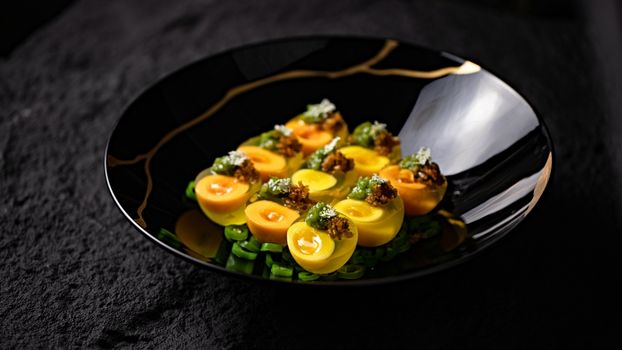
There's a new restaurant in Chicago's West Loop called "Neural Plate." It opened on June 1, and it's already the most talked-about reservation in the city. Why? Because everything — and I mean everything — was designed by artificial intelligence. The menu. The recipes. The plating. Even the wine pairings. A human chef executes it, but the ideas are all from a machine learning model trained on thousands of cookbooks, restaurant reviews, and food science papers.
I managed to get a reservation after a friend of a friend cancelled. I went last Tuesday with two foodie friends, prepared to be either amazed or horrified. Honestly, I was a mix of both.
The Concept
The restaurant is the brainchild of a company called Flavor Labs, which previously worked on AI flavor profiling for big food brands. They partnered with chef Maria Santos (formerly of Alinea) to bring the AI's ideas to life. The AI is called "GAIA" (Generative AI for Interactive Alimentation). It's trained on 50 million data points — recipes, molecular gastronomy papers, customer reviews, even Instagram food photos. It generates dishes based on constraints: seasonality, cost, nutrition, and "novelty score."
The menu changes daily. There's no choice — you get the tasting menu, which is 10 courses for $295 per person. Drink pairing is an extra $150. Yes, it's expensive. But we were curious.
The Space
The dining room is minimalist — white walls, concrete floors, a single long table that seats 20 people. There's a screen at one end showing the "thought process" of GAIA, with random words and data points flashing. It's a bit pretentious, but the lighting is warm, and the service is impeccable. They explained how the meal would work: each dish would be introduced by a server, and then we'd get a card describing the AI's "inspiration."
Course 1: "Ocean Memory"
First dish: a small bowl with a clear broth, a single oyster, and what looked like foam. The card said: "GAIA analyzed 12,000 oyster recipes and determined that the 'essence of ocean' is best captured through a dashi made from kelp harvested at a specific lunar phase, combined with oyster liquor and a foam made from grilled corn."
I tasted it. It was... fine. The broth was clean and briny. The oyster was fresh. The corn foam added a sweetness that I didn't expect. But honestly? It tasted like a good oyster dish at a nice restaurant. The AI didn't create something revolutionary here. It combined existing ideas. That became a theme.
Course 3: "Paradox"
The most famous dish at Neural Plate is the "Paradox." It's a sphere of dark chocolate, served warm, with a liquid center that is somehow both sweet and savory. The card said: "GAIA identified that the combination of 73% cacao chocolate with a fermented black garlic reduction and a touch of fish sauce creates a 'flavor collision' that 94% of predicted palates would find 'intriguing.'"
I bit into it. The chocolate shell cracked. The liquid inside was rich, slightly garlicky, and yes, there was a hint of fish sauce. It was weird. But it worked. My friend said it tasted like a really fancy chocolate bar you'd get at a boutique shop. I think it was genuinely interesting. The fish sauce added an umami depth that made the chocolate feel less sweet and more complex. This was the one dish where I felt like the AI had actually created something new.
Course 5: "Geometric Lamb"
A piece of lamb loin, cooked sous-vide, then seared, cut into a perfect cube, and served with a puree that the card described as "a 3D-printed matrix of beet and yogurt." The plate was a grid of dots. It looked beautiful. It tasted like lamb with beet sauce. Good lamb. Good beet sauce. Nothing groundbreaking. I've had better lamb at a Greek restaurant in Astoria.
Here's my issue: the AI seems to prioritize novelty for novelty's sake. The geometric presentation was cool, but it didn't add anything to the eating experience. It felt like the AI was trying to justify its existence by making things look weird.
The Wine Pairing
The AI also chose the wines. There was a Gruner Veltliner with the oyster course (fine), a Rioja with the lamb (expected), and a weird orange wine from Georgia (the country) with the cheese course that I actually really liked. But the AI also suggested a "cocktail pairing" — a mix of gin, chartreuse, and something called "kombucha vinegar" — that was undrinkable. I left it. The server said that's common feedback, and they're tuning the model.
The Verdict
So was it worth $295? Honestly, no. Not for the food alone. The dishes were good, but not great. I've had better tasting menus at half the price in the same neighborhood. The novelty of the AI concept is interesting, but it wears off after the second course. You realize that the AI is essentially a very sophisticated remixer of existing ideas. It's not inventing new flavors or techniques. It's combining data in ways that sometimes work and sometimes don't.
But here's what I think is really interesting: the AI identified a few combinations that I've never seen before — like the chocolate and fish sauce — and they worked. That's valuable. Chef Maria Santos told me after the meal that she's been using GAIA to brainstorm ideas for her other restaurants. "It's like having a sous chef who has read every cookbook ever written," she said. "I still decide what goes on the menu, but it gives me ideas I wouldn't have thought of."
I think that's the real future of AI in food: not replacing chefs, but acting as a creative tool. Neural Plate is a gimmick right now, a proof of concept. But in ten years, I bet most professional kitchens will use similar tools. The food will be better for it. But for now, I'd rather eat at a restaurant where a human is making the decisions. The AI can be the assistant.
Would I go back? Probably not. But I'm glad I went. It's a conversation starter. And that chocolate sphere? I'm going to try to recreate it at home.