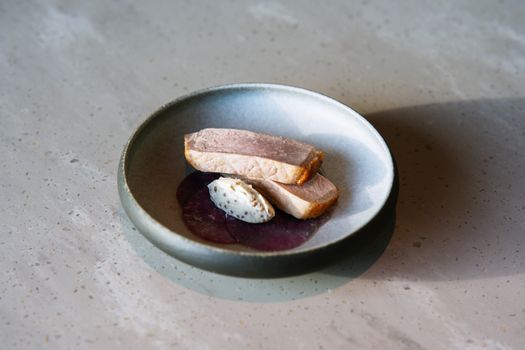
I've been a food writer for a decade, and I've eaten at some incredible places. Eleven Madison Park. Osteria Francescana. The French Laundry. But Noma has always been the white whale—the restaurant that defined modern fine dining, the one that made foraging cool, the one that everyone talks about but few have actually visited. When I heard they were closing their doors for good at the end of 2026, I spent three weeks refreshing their reservation page. I got a table for two on June 20th, 2026.
I don't want to build this up too much, but... it was the best meal of my life. And I say that knowing how pretentious that sounds. Let me explain why.
The Setting: A Warehouse in Christiania
Noma sits in the middle of Christiania, Copenhagen's famous free town. It's a converted warehouse with a massive garden out front. The dining room is warm and understated—exposed beams, wooden tables, soft lighting. No white tablecloths, no stuffy atmosphere. The staff wears aprons, not suits. It feels like you're at a dinner party at a very wealthy friend's house. The service is impeccable but not formal. Our server, a woman named Astrid, introduced herself by her first name and shook our hands. That set the tone for the whole evening.
The Menu: A Farewell to Foraging
Noma's final menu is called "The Last Harvest." It's a retrospective of their greatest hits—dishes that defined the restaurant's three seasons over the years. But with a twist. Everything is sourced from within a 50-mile radius of Copenhagen. The ingredients are hyper-local, hyper-seasonal, and hyper-fresh. The menu has 22 courses. Yes, 22. I was there for four hours.
Highlights included a dish of raw scallops with wild roses and fermented gooseberries. The scallops were so fresh they practically melted on the tongue. The roses added a floral note that I've never tasted in seafood before. Another course was a broth made from smoked reindeer heart and juniper berries. It looked like tea, but it tasted like the forest after a rainstorm. Smoky, earthy, and deeply savory. I drank every drop.