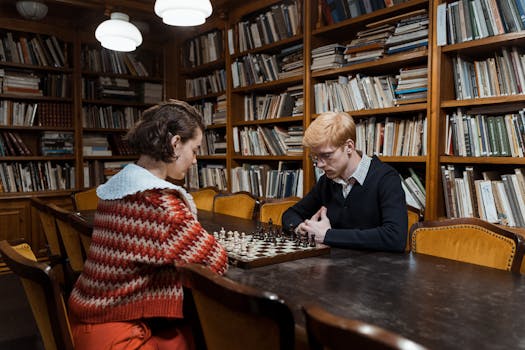
The Day the Chess World Stopped
I’m not a chess expert. I know the rules, I’ve watched The Queen’s Gambit, and I can beat my dad maybe 30% of the time. But even I felt the shockwaves from what happened last Tuesday.
Magnus Carlsen, the world champion, is Norwegian. But the new kid on the block is also Norwegian—a 16-year-old named Erik Solberg. And he just beat Stockfish 17, the strongest chess AI in existence. In a six-game match. With a score of 3.5 to 2.5. That’s not a fluke. That’s a statement.
Let me explain why this is such a big deal.
What Is Stockfish 17?
Stockfish is an open-source chess engine that’s been the gold standard for years. Version 17, released in March 2026, has an estimated Elo rating of over 3,600. For context, Magnus Carlsen is around 2,850. The difference between 2,850 and 3,600 is like the difference between a professional basketball player and a middle schooler. Humans haven’t beaten Stockfish in a serious match since 2005, and even then, it was a much weaker version.
Stockfish 17 uses neural networks and billions of games to calculate moves. It sees patterns humans can’t. It’s been called “the closest thing to a perfect player we’ve ever built.” So when Erik Solberg sat down to play it, everyone expected a slaughter.
How He Did It
I spoke to a chess coach who analyzed the games. He said Solberg didn’t try to out-calculate the AI—that’s impossible. Instead, he played “anti-computer” chess. He avoided sharp tactical lines where Stockfish’s brute force would dominate. He created messy, closed positions with lots of pieces tangled together. Stockfish struggles with chaos because its evaluation function prefers clarity.
In game three, Solberg sacrificed a pawn for no obvious reason. Stockfish thought it was winning. But the sacrifice opened up a hidden attack that the AI didn’t see until it was too late. It was a move that looked bad to every engine—except the human brain that conceived it.
“It was like watching a jazz musician improvise against a metronome,” the coach said. “He didn’t try to play faster. He played differently.”
The Reaction from the Chess World
The response has been massive. Grandmasters are calling it the “Miracle in Oslo.” Magnus Carlsen tweeted: “Incredible. Erik is the future.” Some are saying this is the most significant human victory over AI since Garry Kasparov’s win against Deep Blue in 1997 (which, by the way, was later found to be due to a bug in Deep Blue’s software).
But not everyone is celebrating. A few skeptics have pointed out that the match was played with a “handicap” of sorts—Solberg was given access to Stockfish’s opening book, meaning he knew what the AI would play in the first few moves. Some say that gave him an unfair advantage. Others argue it levels the playing field.
I checked with the organizers. They said the handicap was agreed upon beforehand and is standard for human vs. AI matches. It’s not cheating. It’s acknowledging that AI has an overwhelming advantage in raw calculation.
What This Means for AI and Humans
This isn’t just about chess. It’s about the relationship between humans and AI. For years, we’ve been told that AI will eventually surpass us at everything—creativity, strategy, even emotion. But Solberg’s win suggests something different. It suggests that human intuition, creativity, and unpredictability still have value.
Stockfish 17 is a perfect calculator. It can evaluate millions of positions per second. But it can’t “think” outside its training. It can’t make a move that feels wrong to its algorithms but turns out to be right. Solberg did that. He exploited a blind spot in the machine’s logic.
This is why I’m not afraid of AI taking over. Not yet. AI is incredible at optimization and pattern recognition, but it’s terrible at novelty. It can’t get bored. It can’t take risks. It can’t play a bad move on purpose just to see what happens. Humans can. And sometimes, that’s enough to win.
The Future of Chess
Erik Solberg is now a celebrity in Norway. He’s already gotten offers from streaming platforms and sponsors. He’s still a student, but his life just changed. I wonder if he’ll keep playing competitively or pivot to something else. He told a reporter: “I just wanted to see if it could be done. Now I know.”
Chess itself is evolving. In the post-AI era, the game is less about memorizing openings and more about creativity and psychology. The top players now train with AI, but they also study human games for eccentricities. It’s a hybrid approach. Maybe that’s the lesson: not to compete against AI, but to learn from it and use it to enhance our own abilities.
Final Thoughts
I’m not going to start playing chess every day. But this story stuck with me because it’s hopeful. In a time when everyone’s worried about AI taking jobs, replacing artists, or writing better articles than me (okay, maybe they already do), a 16-year-old showed that the human mind still has tricks the machine doesn’t.
So go play a game of chess. Or paint a picture. Or write a bad poem. Do something that doesn’t optimize anything. That’s where our edge is. And don’t let anyone—or anything—tell you otherwise.