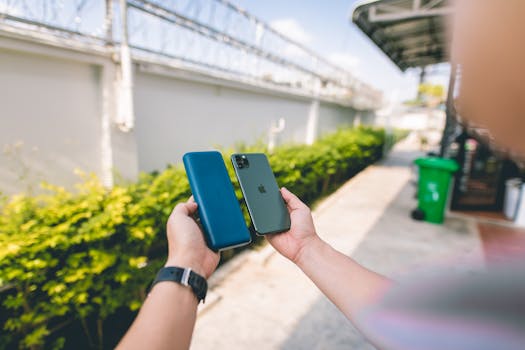
Look, I know phone comparisons are a dime a dozen. Every tech YouTuber with a tripod and a thumb has done one. But here's the thing — most of those reviews are based on spec sheets and press releases. I actually used both phones as my daily driver for two weeks straight. I took them on trips, made calls in bad reception areas, and even dropped them on pavement (accidentally, I swear).
The Pixel 11 and iPhone 17 Pro represent two very different philosophies. Google's phone is all about AI smarts and computational photography. Apple's is about polish, ecosystem, and raw performance. I wanted to find out which one actually makes your life better in 2026. Spoiler: it's not as clear-cut as you'd think.
Design and Build: Apple Still Wins the Hardware Game
The iPhone 17 Pro is a beautiful object. The titanium frame is cold to the touch, the edges are perfectly chamfered, and the camera bump — while still ridiculous — sits flush with a new glass back that feels premium. I've been carrying the 'Desert Titanium' color, and I've gotten compliments from strangers. That doesn't happen with the Pixel.
The Pixel 11, on the other hand, is fine. It's not ugly, but it's not stunning either. Google went with a recycled aluminum frame and a matte glass back that feels nice but picks up fingerprints. The camera bar across the back is still there, and it still collects pocket lint. It's comfortable to hold one-handed, which is more than I can say for the iPhone's sharp edges.
But here's the real test — durability. I dropped the iPhone from waist height onto concrete, and it got a small dent in the titanium frame but the screen survived. The Pixel 11 fell from the same height and the back glass cracked. I'm not saying the Pixel is fragile, but the iPhone feels more solid. Apple's Ceramic Shield is not just marketing fluff.
Winner: iPhone 17 Pro. It's better built, looks better, and feels more premium. The Pixel is fine, but fine isn't enough at this price point.
Display: Both Are Stunning, But One Has a Secret Weapon
The iPhone 17 Pro has a 6.3-inch LTPO OLED with a 120Hz ProMotion display. It gets bright — up to 2000 nits peak brightness — and the colors are accurate. Watching HDR content on it is genuinely impressive. Apple's True Tone technology makes it easy on the eyes too.
The Pixel 11 has a 6.4-inch LTPO OLED with a 120Hz refresh rate, but it goes up to 2500 nits peak brightness. In direct sunlight, the Pixel is easier to read. That's a real advantage if you spend time outdoors.
But the Pixel's secret weapon is the 'Adaptive Display' feature that adjusts color temperature based on the content and ambient light. It sounds like a gimmick, but after a week, I noticed my eyes felt less tired at night. The iPhone does something similar with Night Shift, but the Pixel's implementation is more aggressive and effective.
Winner: Pixel 11, barely. The brightness advantage and adaptive display make a real difference in daily use. The iPhone's display is gorgeous, but the Pixel is more practical.
Camera: The Pixel's Magic vs Apple's Consistency
This is the category everyone cares about. I took over 500 photos with both phones in every condition you can imagine — bright daylight, golden hour, dim restaurants, pitch-black bars, and even in the rain.
The Pixel 11's camera is remarkable in a way that feels almost unfair. Google's 'Real Tone' processing makes skin tones look natural in a way Apple still struggles with. The new 'Magic Eraser 2.0' feature can remove unwanted objects from photos with a single tap, and it actually works. I removed a random stranger from a photo at a concert, and you can't tell they were ever there.
But the Pixel's weakness is consistency. Sometimes the processing is too aggressive. I took a photo of a red flower, and the Pixel oversaturated it to the point where it looked fake. The iPhone 17 Pro, on the other hand, produces a photo that looks flat and unprocessed — but it's what you actually saw. Apple's image processing is boring but reliable.
Low-light performance is close. The Pixel's 'Night Sight' mode is faster than before — about 2 seconds — and produces brighter images. The iPhone's night mode is more natural but darker. For video, the iPhone wins easily. The Pixel's video stabilisation is good, but the iPhone's Cinematic mode in 4K at 60fps is something else.
Winner: Pixel 11 for photos, iPhone 17 Pro for video. If you take more photos than videos, get the Pixel. If you vlog or shoot a lot of video, get the iPhone.
Performance: The M4 Chip vs Tensor G7
Apple's A18 Pro chip is a monster. In raw benchmarks, the iPhone 17 Pro scores about 15% higher than the Pixel 11's Tensor G7. But here's the thing — I couldn't tell the difference in daily use. Both phones open apps instantly, both handle multitasking smoothly, and both play demanding games like Genshin Impact at max settings without stuttering.
Where the Tensor G7 falls behind is thermal management. After 30 minutes of gaming, the Pixel 11 gets noticeably warm on the back. The iPhone stays cool. That's a significant difference if you're a gamer.