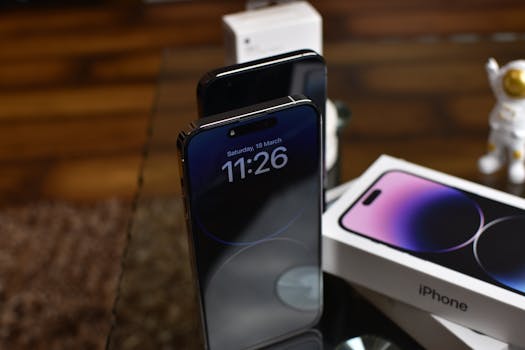
The Battle That Never Ends
Let’s be honest—the Apple vs. Samsung debate has been going on for over a decade, and it’s only gotten more heated. I’ve been using both brands for years, switching back and forth like a smartphone polygamist. But this year, something changed. Both companies released their flagship devices within weeks of each other: the iPhone 16 Pro Max and the Galaxy S26 Ultra. I bought both, used each as my daily driver for two weeks, and I’m ready to give you an honest, no-nonsense comparison.
Design and Build Quality
The iPhone 16 Pro Max is a stunning piece of engineering. It’s made from titanium, which makes it lighter than last year’s model. The edges are slightly curved, making it feel more comfortable in hand. But here’s my honest take—it’s still an iPhone. It looks like an iPhone. If you’ve seen one since the iPhone 12, you’ve basically seen them all. The Dynamic Island is still there, and while it’s functional, it’s not revolutionary.
The Galaxy S26 Ultra, on the other hand, is a beast. Samsung went with a ceramic back and an aluminum frame. It’s heavier, but it feels solid. The S Pen is built in, which is a huge plus if you’re a note-taker or digital artist. The display is slightly larger at 6.9 inches compared to the iPhone’s 6.7 inches. Both have 120Hz OLED screens, but Samsung’s is brighter—peak brightness hits 3000 nits. In direct sunlight, the Galaxy is just easier to read.
Camera Performance
This is where things get interesting. The iPhone 16 Pro Max has a 48MP main sensor, a 12MP ultrawide, and a 12MP telephoto with 5x optical zoom. The Galaxy S26 Ultra has a 200MP main sensor, a 12MP ultrawide, and two telephoto lenses: one with 3x and one with 10x optical zoom. On paper, Samsung wins. But in real-world use, it’s not that simple.
I took both phones to a park on a sunny afternoon. The iPhone’s photos were incredibly natural—colors looked exactly like what I saw with my eyes. Skin tones were accurate, and the HDR handled shadows beautifully. The Galaxy’s photos were more vibrant—almost too vibrant. Samsung has a tendency to oversaturate colors, especially greens and blues. Some people love that look. I think it’s a bit artificial.
But here’s where the Galaxy wins: zoom. At 10x zoom, the iPhone’s photos are noticeably softer. The Galaxy’s are sharp and clear. I took a photo of a bird from about 50 feet away, and the Galaxy captured details I couldn’t see with my naked eye. If you’re a zoom junkie, Samsung is the clear choice.
Performance and Battery Life
Both phones are incredibly fast. The iPhone uses the A19 Bionic chip, and the Galaxy uses the Qualcomm Snapdragon 8 Gen 5 (or Exynos 2600, depending on your region). In benchmarks, the iPhone is slightly faster in single-core performance, but the Galaxy wins in multi-core and GPU tests. In real-world use, I couldn’t tell the difference. Apps open instantly, games run smoothly, and multitasking is flawless on both.