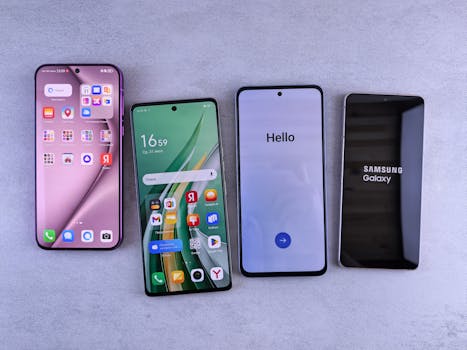
If you're in the market for a new phone right now, you're probably torn between two names: Apple and Samsung. It's the eternal debate, and it's only gotten more heated this year. Apple just dropped the iPhone 17 Pro in September, and Samsung fired back with the Galaxy S26 in February. I've been using both phones for the past three months — not just reviewing them, but living with them. I've taken them on trips, used them for work, played games, taken photos, and even dropped one (the iPhone, into a puddle — it survived). So which one should you actually buy? Let me break it down without the marketing fluff.
Design and Build: The Tale of Two Phones
The iPhone 17 Pro is a refinement of a familiar design. It's got a titanium frame, a glass back, and a 6.3-inch OLED display with a 120Hz refresh rate. It feels premium in the hand, but it's also heavy — about 220 grams. The Samsung Galaxy S26, on the other hand, is lighter at 195 grams, with a slightly larger 6.5-inch AMOLED display that also runs at 120Hz. Samsung's design is more angular, with sharper corners, while the iPhone is softer and rounder. Which looks better? That's subjective. But for me, the Samsung feels more modern, while the iPhone feels like a safe bet. Both are water-resistant (IP68), so you don't have to worry about rain or spills.
Display: Samsung Takes the Lead
I'm going to be honest: Samsung's displays have always been better, and the S26 is no exception. The colors are more vibrant, the blacks are deeper, and the brightness is insane — it hits 2,600 nits peak, compared to the iPhone's 2,000 nits. That means you can read the screen in direct sunlight, which is a big deal if you're outside a lot. The iPhone's display is still excellent — it's bright, color-accurate, and smooth — but Samsung is the clear winner here. If you watch a lot of HDR content or play games, you'll notice the difference.
Camera: Which One Takes Better Photos?
This is where things get interesting. Both phones have triple-camera setups. The iPhone 17 Pro has a 48MP main sensor, a 12MP ultrawide, and a 12MP telephoto with 3x optical zoom. Samsung's S26 has a 200MP main sensor, a 12MP ultrawide, and a 10MP telephoto with 5x optical zoom. The specs suggest Samsung wins, but real-world results are more complicated. In good lighting, both phones take stunning photos. The iPhone's colors are more natural, while Samsung's are punchier. In low light, the Samsung struggles a bit with noise, while the iPhone does a better job of keeping things clean. But the Samsung's zoom is clearly better — 5x optical zoom means you can get closer without losing detail. For video, Apple is still the king. The iPhone's stabilization is unreal, and the new Cinematic mode in 4K at 60fps is a game-changer for amateur filmmakers. If you shoot a lot of video, get the iPhone. If you want the best zoom for photos, get the Samsung.
Performance: Benchmarks vs. Real Life
The iPhone 17 Pro runs on the A19 Bionic chip, while the Samsung uses the Snapdragon 8 Gen 4 (or the Exynos 2600 in some regions). On paper, the A19 is faster in single-core tasks, but the Snapdragon catches up in multi-core. In everyday use, you won't notice a difference. Both phones are blazing fast. Apps open instantly, games run smoothly, and multitasking is a breeze. I played Genshin Impact on both at max settings, and they were identical in performance. The real difference is software. iOS 20 is smooth, simple, and secure, but it's locked down. Android 16 on the Samsung is more customizable, with better multitasking features like split-screen and pop-up windows. If you like tinkering with your phone, go Samsung. If you want a phone that just works, go iPhone.