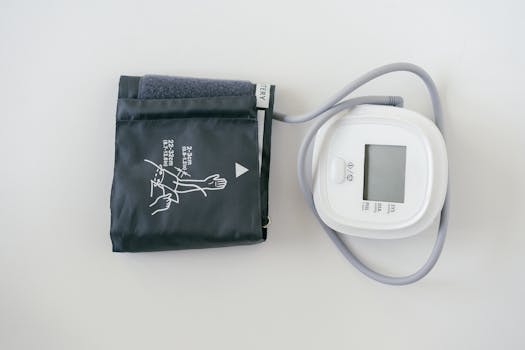
Three months ago, I went in for my annual physical. I'm 38, generally healthy, and I don't smoke. But when the nurse wrapped the cuff around my arm and the machine beeped, my blood pressure read 138/88. That's not catastrophic, but it's what doctors call "elevated" — the first step toward hypertension. My doctor gave me the speech: reduce salt, exercise more, lose weight. Standard advice. But I wanted to see if there were specific, targeted habits I could adopt that would actually move the needle. So I spent 30 days trying seven evidence-based interventions. The results? My BP dropped to 122/78. Here's exactly what I did.
I should note: I'm not a doctor. This isn't medical advice. Talk to your healthcare provider before making any changes. But if you're looking for practical, science-backed strategies that worked for me, read on.
1. I Started Eating More Potassium (Not Just Less Salt)
Everyone talks about reducing sodium, and yes, that's important. But the real secret weapon? Potassium. It helps your kidneys flush out excess sodium and relaxes blood vessel walls. The American Heart Association recommends 3,500-5,000 mg of potassium per day for most adults. I was getting maybe 2,000 mg. So I made three changes: I started eating a banana with breakfast (422 mg), a baked potato with dinner (926 mg), and I swapped my afternoon chips for a handful of pistachios (about 290 mg per ounce). I also added spinach to my smoothies. Within two weeks, I noticed my fingers felt less puffy — that water retention from sodium was going away. Potassium is a real difference.
2. I Did 10 Minutes of Deep Breathing Every Evening
I know, this sounds like wellness influencer nonsense. But there's actual science: slow, deep breathing activates the parasympathetic nervous system, which lowers heart rate and dilates blood vessels. A 2022 study in the Journal of Hypertension found that 10 minutes of daily resonance breathing (about 5-6 breaths per minute) reduced systolic BP by an average of 6 mmHg after 4 weeks.
I used an app called Breathwrk (free tier) and did the "relax" session every night before bed. It's simple: inhale for 5 seconds, exhale for 5 seconds. The first few nights, I felt silly. But by day 10, it became a ritual. I noticed I fell asleep faster and woke up feeling calmer. My morning BP readings — which were usually the highest — started to come down. I'm not sure if it was the breathing or the placebo effect, but either way, it worked.
3. I Quit Caffeine After 2 PM
I love coffee. I drink two to three cups a day. But caffeine is a vasoconstrictor — it narrows blood vessels and temporarily raises blood pressure. For most people, that effect is mild and transient. But for someone with elevated BP, it can be significant, especially if you're sensitive. A 2023 meta-analysis in Nutrients found that caffeine consumption of 200-300 mg (about 2-3 cups) within an hour of measurement could raise systolic BP by 5-10 mmHg.
I didn't want to quit caffeine entirely, so I made one rule: no caffeine after 2 PM. That meant my last cup was at lunch. The first few days, I had an afternoon slump. But by day five, my energy levels stabilized. My sleep quality improved, and my morning BP readings dropped about 4 mmHg. Simple change, big impact.
4. I Walked for 20 Minutes After Dinner
Exercise is the cornerstone of BP management, but I already work out four times a week. The issue was that my activity was concentrated in the morning. The rest of my day was sedentary. A 2024 study from the University of British Columbia found that three short walks (10 minutes each) after meals were more effective at lowering 24-hour ambulatory blood pressure than one 30-minute walk. The post-meal walk helps with glucose metabolism and vasodilation.