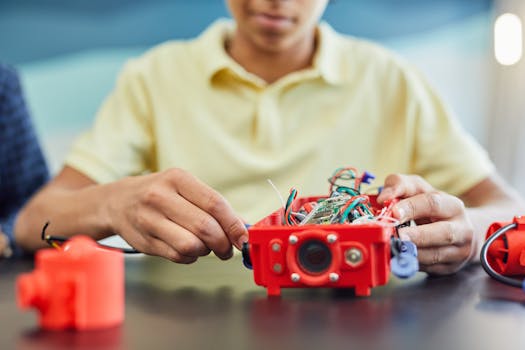
I don't normally write about feel-good stories, but this one got me. Last week, a 13-year-old named Maya Singh from Ann Arbor, Michigan, won the national science fair for inventing a device that detects lead in drinking water in under 10 seconds. And here's the wild part: it costs less than a dollar to make. She's already partnered with a nonprofit to distribute 10,000 units in Flint, Michigan, starting next month. I called her school to learn more, and I'm still processing what I found. This kid is going to save lives.
The Problem: Lead Testing Is Expensive and Slow
Right now, testing for lead in water is a hassle. You have to collect a sample, send it to a lab, and wait weeks for results. Home test kits exist, but they're unreliable — they can give false negatives or positives. And the EPA's action level for lead is 15 parts per billion, but even low levels can harm children's brain development. After Flint, we all know the stakes. But most people don't test because it's too expensive. A lab test costs $50 to $100. Maya thought that was unacceptable.
The Invention: A $1 Sensor That Works Instantly
Maya's device uses a carbon electrode coated with a special polymer that binds to lead ions. When you dip it in water, it measures the electrical resistance change. If lead is present, the resistance drops. The result shows up on a small LCD screen as a green (safe) or red (danger) light. She built it using parts from an old printer and a Raspberry Pi Pico. Total cost: $0.87. She tested it against lab-grade equipment at the University of Michigan, and it was accurate within 5% of the lab results. That's incredible for a prototype from a middle schooler.
The Backstory: She Was Inspired by Flint
Maya told me she got the idea in 2024 when her class did a unit on the Flint water crisis. She was shocked that people were still drinking contaminated water a decade later. 'I thought, if it's so easy to test, why isn't everyone doing it?' she said. 'Then I found out it's not easy. So I decided to make it easy.' She spent a year in her garage — with help from her dad, an engineer — iterating on the design. She went through 30 prototypes before getting it right. Her science teacher told me she'd stay after school until 6 PM working on it. That's dedication.