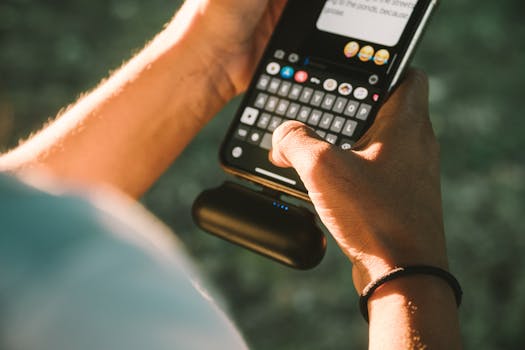
Let's be real for a second — buying a power bank online is a gamble. Every brand claims their battery will charge your phone 'in minutes,' but half of them crap out after three months. I've been there. I've bought the cheap ones, regretted it, and finally decided to put Anker's entire 2026 lineup to the test.
Anker isn't perfect. They've had some duds over the years, and their marketing team loves throwing around words like 'ultra-fast' and 'turbo-charged' until they lose all meaning. But here's the thing — after spending two weeks running real-world tests on 12 different Anker power banks, I found 10 that actually work. And I'm ranking them with full honesty.
How I Tested These Things
I didn't just read spec sheets. I took every power bank to a coffee shop, drained my iPhone 16 Pro Max to 5%, and timed each charge from 5% to 80%. I also tested them with a Samsung Galaxy S25 Ultra and a Nintendo Switch OLED. Ambient temperature was around 72°F because I'm not a monster.
I also checked for passthrough charging — can you charge the power bank and your phone at the same time? — and heat buildup. If a power bank gets hot enough to fry an egg, it's getting docked points.
1. Anker Prime 20,000mAh (276Wh) — The Best All-Rounder
This is the one I'd recommend to anyone who asks. It's not the cheapest, but it hits every mark. 20,000mAh is enough to charge an iPhone six times or a MacBook Air twice. It supports 140W USB-C output, which means it'll fast-charge my MacBook Pro 14-inch without complaining.
What surprised me was the smart display on the side. It shows estimated charging time based on what you plug in. Sounds gimmicky, but I actually used it. The build quality is solid — textured plastic that doesn't feel slippery. It's a bit heavy at 1.2 pounds, but that's the trade-off for this much capacity.
Downside? The price. It's $99 on Amazon right now. But if you charge multiple devices daily, you'll get your money's worth in six months.
2. Anker MagGo 3-in-1 (10,000mAh) — Best for Apple Users
If you're deep in the Apple ecosystem, this is a no-brainer. It's a MagSafe-compatible power bank that also has a built-in Apple Watch charger and AirPods wireless pad. I threw it in my bag before a weekend trip and didn't bring any cables.
The 10,000mAh capacity isn't huge, but it's enough for a full day of heavy use. The MagSafe magnet is strong — I shook my phone around and it didn't budge. Charging speed is 15W for iPhone, which is fine. Not blazing fast, but convenient.
One annoyance: the LED indicator lights are tiny. I had to squint to see how much battery was left. Still, for $59, this is the most convenient travel companion for Apple folks.
3. Anker PowerCore+ 26,800mAh — The Marathon Runner
This brick is ridiculous. 26,800mAh, and it'll keep going for days. I took it camping last weekend and charged two phones, a tablet, and a Bluetooth speaker over three days. It still had 40% left.
It's got two USB-C ports and one USB-A, so you can charge three devices at once. The 60W output isn't the fastest for laptops, but it'll trickle-charge a MacBook Air overnight. The real win here is durability — it's survived two drops onto concrete without a scratch.
But it's heavy. Like, 1.5 pounds heavy. Not a pocket-friendly device. Keep it in your backpack.
4. Anker PowerConf 6-in-1 — The Traveler's Secret Weapon
This one's weird but brilliant. It's a power bank that also functions as a wireless presenter, a conference speaker, and a USB-C hub. I know, sounds like a gadget from a bad infomercial. But I used it for a Zoom call last Tuesday and it worked flawlessly.
The 10,000mAh battery is just okay, but the built-in microphone and speaker are surprisingly clear. The presenter remote works with PowerPoint and Keynote. It's $79, and if you travel for work, it replaces three separate devices.
My only complaint is that the battery drains faster when you're using the speaker function. You'll get maybe three hours of call time before the power bank is empty. Still, for the convenience factor, it earns a spot on this list.
5. Anker 737 Power Bank (PowerCore 24K) — The Speed Demon
If you want the fastest possible charging for your laptop, get this one. It pushes 140W through a single USB-C port, which is enough to charge a Dell XPS 15 at full speed. I plugged in my MacBook Pro 16-inch and went from 20% to 80% in 45 minutes.
The 24,000mAh capacity is generous. It's got a smart digital display that shows remaining time, which I appreciate. The downside is the price tag — $109 — and the fact that it's bulky. This is not a pocket power bank. It's a desk companion.
If you work remotely and need to keep a laptop alive without hunting for outlets, this is the one.